Wire or Straight Blade? Choosing and Using a Soap Cutter
Share
A soap cutter should suit the soap you make, the thickness you want and the number of loaves you cut. A multi-wire frame can save repeated measuring on cold-process batches. A straight blade is a practical choice for melt-and-pour and gives you flexibility for occasional cuts. Start with compatibility before comparing size or speed.
Match the cutter to the soap process
Standard hobby wire cutters generally work with cold-process soap while it is firm enough to slice but still uncured. Fully set melt-and-pour is harder on those wires. Nurture Handmade's cutter instructions specifically warn that set melt-and-pour can break the wires and recommend a knife instead.
That does not make every wire machine unsuitable. SoapEquipment's cutting guide describes dedicated melt-and-pour equipment with a different cutting arrangement. The useful rule is to check the exact cutter's stated compatibility. A wire frame sold for cold-process soap should not become a melt-and-pour cutter simply because the loaf fits inside it.
For a small home setup, a suitable straight blade is therefore a sensible melt-and-pour starting point. Bramble Berry, for example, lists its metal soap cutter for both cold process and melt-and-pour.
Choose a straight blade for flexible, individual cuts
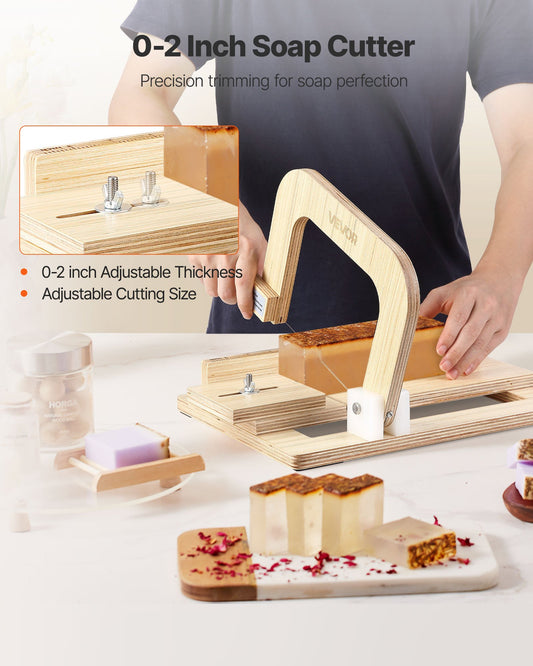
A straight blade lets you decide where each slice begins. That is useful for a short loaf, different bar thicknesses or a small end trim. A cutting guide can help keep the blade upright; without one, mark the intended cuts and check alignment before pressing down. Keep fingers clear of the cutting path and work on a stable cutting surface.
Our bamboo loaf mold and cutter kit includes a slotted cutting box for one-inch bars, plus straight and wavy stainless-steel cutters. The straight blade gives a flat cut; the wavy blade adds a textured face. Choose the finish deliberately, since switching blades changes the appearance of the whole batch.
Choose wire for repeatable cold-process portions
A single-wire cutter with an adjustable stop is useful when you want repeatable slices while keeping a choice of thickness. A multi-bar cutter makes several cuts in one movement, which becomes more appealing when you regularly handle multiple loaves.
Before buying, compare the cutter's usable loaf width and height with your actual soap, including any raised top. Check whether bar spacing is fixed or adjustable, how replacement wires are supplied and how the frame is cleaned. A fixed one-inch spacing is only helpful if one-inch bars suit your plans. Equal thickness also does not guarantee equal finished weight when loaf shape or composition varies.
Check readiness before cutting the whole loaf
Cold-process cutting time varies with the recipe and conditions. Follow your recipe and cutter instructions, then assess the loaf rather than treating an hour count as a guarantee. It should hold its shape and allow a clean cut without excessive force. Soft soap that squashes or smears needs reassessment before you continue; a very hard loaf should not be forced through delicate wires.
Melt-and-pour needs to cool and harden before cutting. It does not need the same curing period as cold-process soap, as Bramble Berry's melt-and-pour guide explains. Let the base's instructions guide the cooling stage, particularly for a thick loaf.
Build a clean cutting routine
- Inspect the tool. Check blade condition, wire condition and secure fittings. Adjust wire tension according to the manufacturer's directions; extra tightness is not a substitute for a suitable soap texture.
- Align the loaf. Place it squarely against the guide or stop. Decide where any uneven end will fall before committing to a multi-bar cut.
- Use a controlled movement. Follow the cutter's intended motion and stop if resistance feels excessive. Do not saw back and forth with a wire frame.
- Remove buildup. Soap stuck to the cutting surface can mark later bars. Clean between cuts as needed and follow the tool's care instructions afterward.
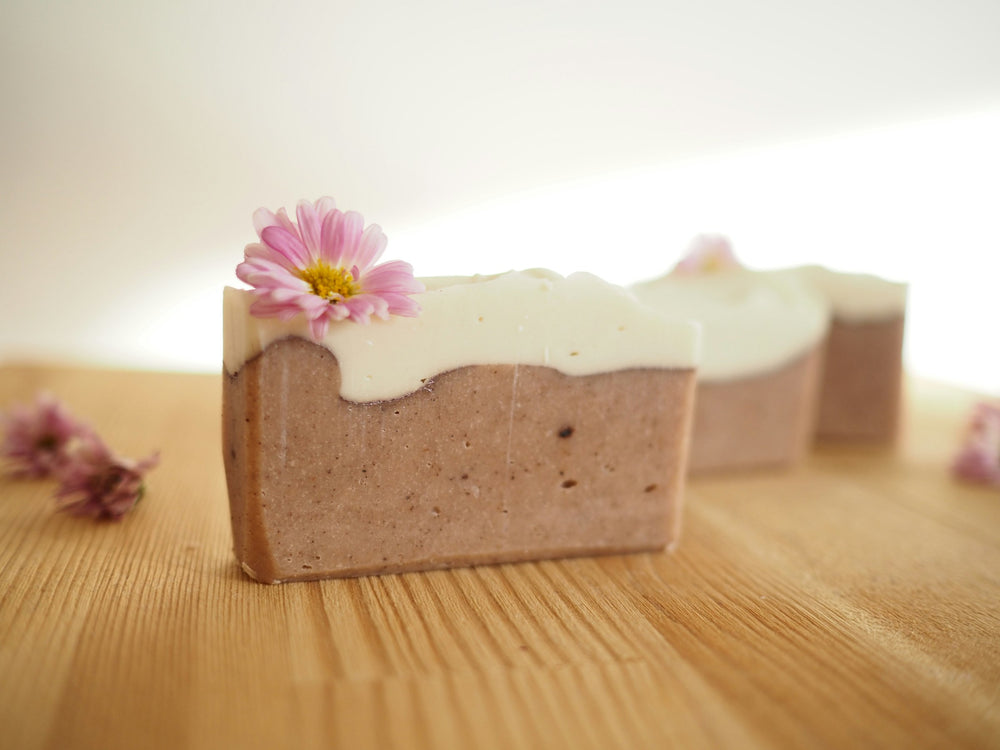
Toppings need attention too. Bramble Berry's multi-bar instructions recommend cutting a loaf with botanical toppings upside down to reduce drag marks, cleaning the wires after each cut and removing bars before raising the frame. Check that those steps suit your own cutter and design.
Keep cutting separate from curing
A neat slice does not establish that a cold-process batch is ready to use. Continue the recipe's curing and safety steps. Bramble Berry's cold-process guide recommends a typical four-to-six-week cure with good airflow and keeping soap-making equipment separate from food tools.
For occasional melt-and-pour loaves, begin with an appropriate blade and a reliable guide. For repeated cold-process batches, consider wire once you know your preferred bar size and cutting window. The best upgrade is the one that makes your existing routine easier to repeat.